

 By
By Sourdough a grandma could love
Sometimes life reaches a point where you start gravitating toward grandma hobbies.
Mine is sourdough.
For years, I dreamed about being able to make the perfect sourdough bread. I watched videos, saved recipes and convinced myself that one day I would become a sourdough expert.
However, the process was intimidating. I once tried to make a sourdough starter from scratch, and it was an epic failure.
After that, I didn’t try again for a year.
Then, one day, my friend gave me some of her starter. The bubbly, slightly funky-smelling mixture that had once seemed so intimidating was suddenly sitting in my kitchen, ready to become bread.
As usual, you have to name your starter. In my household, “How I Met Your Mother” is a staple, so I decided to name mine Patrice.
The day finally came to bake my first loaf. My friend, who had gifted me the starter, was kind enough to walk me through the process while making a loaf of her own.
We fed the starter twice, first at a 1-2-2 ratio and then at a 1-7-7 ratio. My friend also had a warming mat, which we turned on high to help the starter rise more quickly.
From there, we followed Alexandra’s Kitchen’s homemade sourdough bread recipe. We did two stretch-and-folds before letting the dough sit in the refrigerator overnight.
The next day, we shaped the dough, used the push-and-pull method to build tension, scored the top, and put it in the oven in a preheated Dutch Oven.
We baked it at 450 degrees for 30 minutes covered, then lowered the temperature to 400 degrees and baked it for another 10 minutes uncovered.
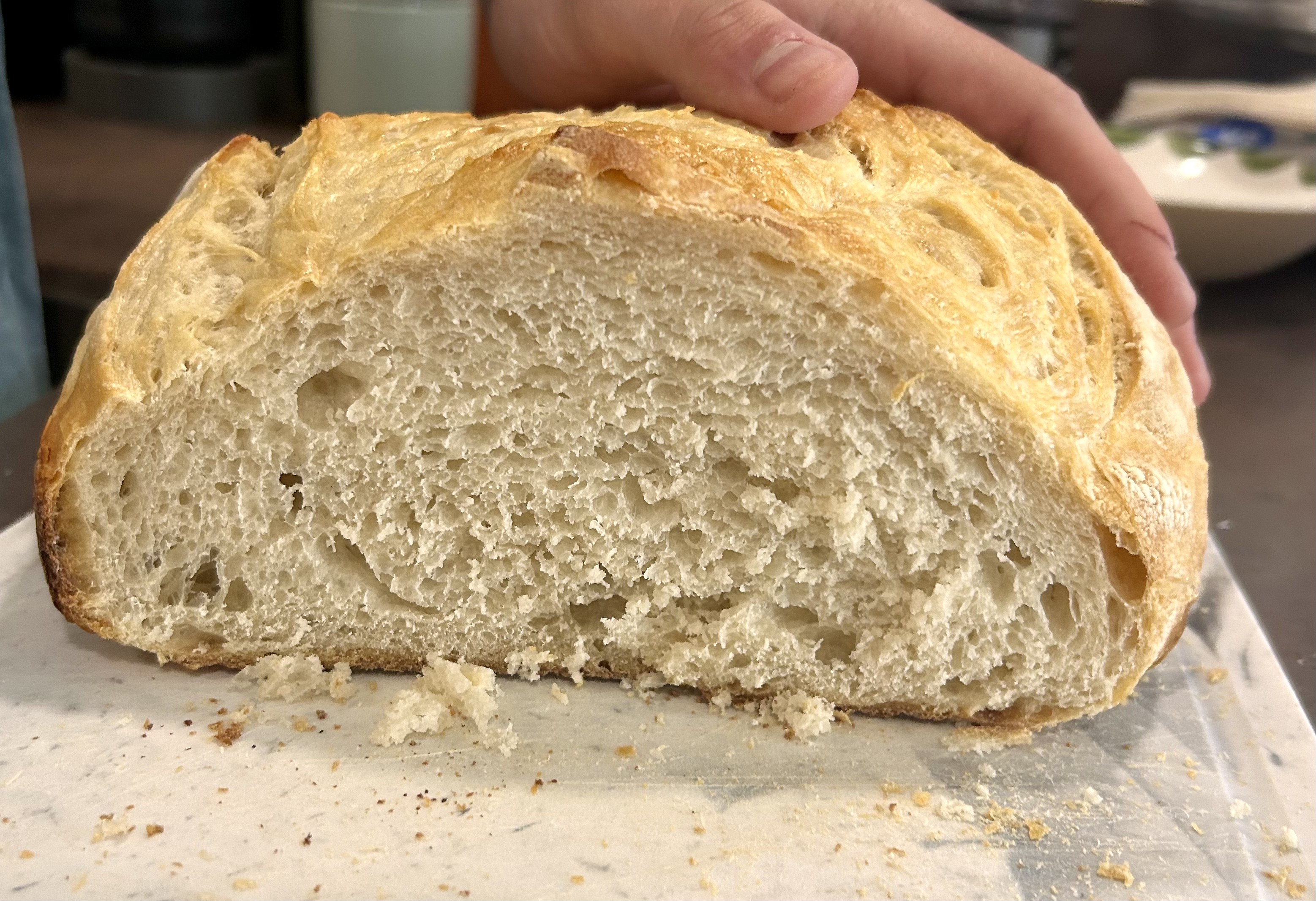
For my first loaf, and for the first time Patrice was used, it was delicious.
The crust was crisp and golden brown, while the inside was soft, chewy, and full of those little air pockets that make sourdough so satisfying.
It was far from the perfect loaf I had spent years dreaming about, but I made it myself, which somehow made it taste even better.
And, of course, when you have bread, you need butter.
Who knew someone could get so excited about making bread and butter?
For the butter, I used a full bottle of heavy cream and mixed it on high in my stand mixer until it separated.
It is a quick process, only taking roughly 20 minutes, although it feels like it takes forever when you are standing there waiting for something to happen.
Once the cream separates, the goal is to squeeze out as much liquid as possible. Too much liquid can cause the butter to spoil and mold.
I gave the butter an ice bath to help it harden, squeezed out even more liquid and kneaded in salt. It was messy, but it was worth it.
The liquid that comes out is buttermilk, which we later used to make buttermilk pancakes that Saturday. Somehow, one baking project turned into bread, homemade butter and pancakes.
Sourdough can be intimidating, especially when you are staring at recipes full of ratios, stretch-and-folds, and instructions about dough hydration.
But once you get past the fear of doing it wrong, there is something satisfying about slowing down and making something with your hands.
Between you and me, most of the tricks and “rules” that the sourdough influencers say are a requirement aren’t that serious.
Everyone makes it out to seem a lot harder than it actually is. If you overpour an ingredient, it won’t be the end of the world.
Just take your time, and learn on the way.
Maybe that is the appeal of these so-called grandma hobbies. They take time, they can be a little messy, and they are certainly not as convenient as buying a loaf of bread at the store.
But there is something special about making it yourself.
So, if life is pushing you toward your grandma-hobby era, embrace it. Start the sourdough. Make the butter. And if all else fails, make some pancakes with the leftover buttermilk.
Up next on what to make: sourdough chocolate chip cookies and a pumpkin chocolate chip loaf.


